The short answer.
For an original Nintendo Switch or Switch OLED, a laptop can show a capture-device preview. An ordinary laptop HDMI output cannot receive the console directly. Switch Lite does not support TV mode.
Identify the console and laptop ports
This guide covers the original Nintendo Switch and Switch OLED TV-mode arrangement. It does not assume the same dock or accessories work with Switch 2. Check your exact console model before buying hardware.
Nintendo play-mode documentation distinguishes supported TV mode from Switch Lite. On the laptop, look for a documented video input. Most HDMI ports are outputs, so connecting the dock to that port will not make the laptop screen receive the picture.
Choose a compatible capture device
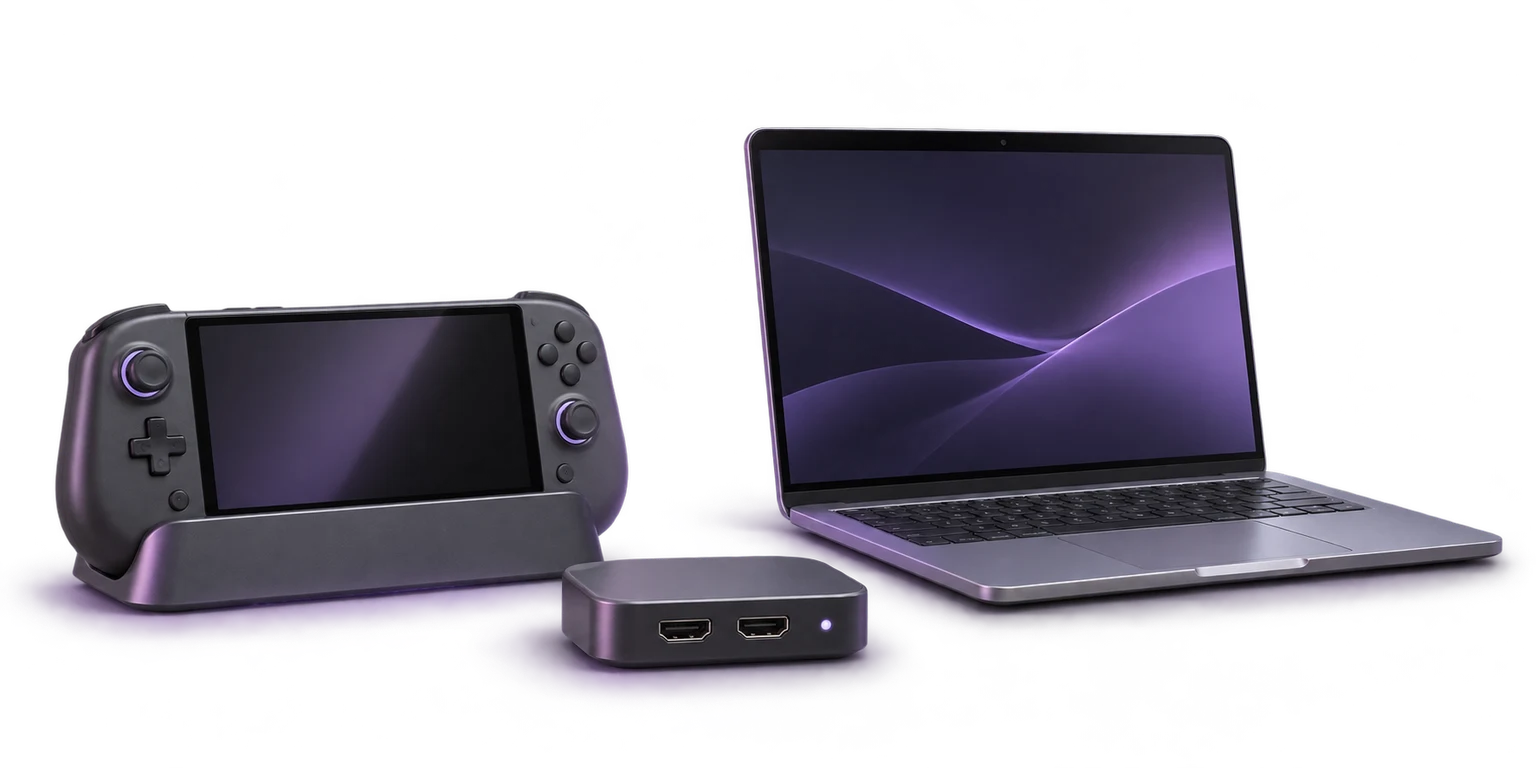
The signal path is console dock HDMI output to capture-device HDMI input, then capture USB output to the laptop. The capture device must support your operating system and the USB connection available on the laptop.
Check capture resolution separately from HDMI input and passthrough specifications. A device may accept a signal at a higher resolution than it records or previews. Confirm audio support and included cables as well, especially on inexpensive listings with incomplete specifications.
Set up the preview
Connect the console using its supported dock and power arrangement. Connect the capture device to the laptop, then select it as a video source in compatible capture software. Choose the audio source and confirm sound is not being duplicated through two monitoring paths.
Use the capture manufacturer instructions for drivers and supported modes. Start with a documented resolution and frame rate rather than increasing every setting. If no picture appears, check the console TV output, HDMI direction and selected capture source before replacing hardware.
Account for preview latency
The laptop shows video after capture and software processing, which can introduce delay. That delay may be acceptable for a demonstration but frustrating for fast games. We have not measured latency for a particular capture device here.
If the device provides suitable HDMI passthrough, a separate monitor can show the console while the laptop handles capture. Verify what the manufacturer promises for that exact model. Passthrough and the laptop preview are different paths.
Decide whether capture is worth the extra setup
If your only aim is to play on a larger screen, a compatible TV or monitor is simpler than assembling a laptop capture chain. Capture makes more sense when you also need to record or present permitted gameplay.
Do not try to bypass protected-video restrictions. For computer-to-computer use, our laptop as a monitor guide covers supported wireless projection. For an ordinary larger display, see connecting a laptop to a TV.
Map the console, dock and capture ports
A standard Switch or Switch OLED sends television video through its dock's HDMI output. Most laptop HDMI ports also output video, so they cannot receive that signal directly. A capture device with HDMI input and a compatible computer connection can create a preview window. The Switch Lite does not support TV mode. Check Nintendo's instructions for the exact console and dock, then confirm the capture unit's input, software and USB requirements before buying. Elgato's Switch setup page is one product-specific example of the signal route.
Keep the dock's specified power supply connected. A connector that physically fits the dock may not support the same television mode. Begin with the console, dock, capture device and laptop, leaving optional splitters out until the basic picture works.
Nintendo’s play-mode chart identifies the console models that support TV output. Check the model number on your own device before ordering capture hardware.
Choose between preview and passthrough
The laptop shows a software preview after the capture unit processes the HDMI signal. That can introduce delay. Some capture devices also provide HDMI passthrough to a television or monitor, letting you play on that display while the laptop records. Elgato's HD60 X specifications distinguish capture and passthrough modes, but another product may have different limits. Check the exact model, resolution and frame-rate support for your setup.
Test a fast game in the software preview before deciding it is comfortable. If it is not, do not assume changing a laptop display setting can remove capture latency. A direct television or monitor is the simpler play screen.
Troubleshoot one link at a time
If the preview is black, first check the Switch model, dock power and HDMI cable. Verify that the capture software selected the correct device and that the laptop meets its USB and operating-system requirements. Test the dock on a known working TV to isolate the console output. Then test the capture box with another known working HDMI source if supported. If video works but audio does not, check the capture app's audio input and whether headphones are connected to the console.
Record the working arrangement of ports and cables. A neat setup is useful only if it can be reconnected without guessing. Keep the console's own screen available for settings and avoid purchasing a second adapter until you know which part of the path is missing.
Common questions
Can I plug Switch HDMI directly into my laptop?
Usually no. A normal laptop HDMI connector is an output. You need a documented video input or a compatible capture device to receive the dock's signal.
Does Switch Lite work with a capture card?
Switch Lite has no TV mode, so a dock-style HDMI capture route does not apply. Check Nintendo's model information before buying a dock, converter or capture device for that purpose.
Will a capture preview feel like a TV?
It may have noticeable delay because the video passes through capture hardware and software. Test the exact setup with the games you play. A passthrough display can be a better play screen when low delay matters.
Why is there no game sound?
Check the capture app's audio source and whether the console is routing sound to its headphone jack. Confirm the HDMI and capture connection first, then change one audio setting at a time.
How this guide was prepared
We explain documented features and practical considerations using research-based guidance. We do not claim to have tested a device unless a test is specifically documented. Check manufacturer instructions, compatibility and current retailer terms before acting.